
Views: 0 Author: Site Editor Publish Time: 2026-02-28 Origin: Site
In stamping production, the feeding system serves as the critical bridge connecting raw materials to the die. Choosing the wrong feeder can lead to insufficient precision, low efficiency, and even frequent downtime. Among various feeding equipment, servo feeders and air feeders are the two most representative options—one renowned for precision, the other for economy.
This article will delve into the application scenarios of both equipment based on their core characteristics, helping you find the best "partner" for your press.
Core Characteristics Comparison
Based on equipment technical parameters and practical application feedback, the core differences between the two feeders are as follows:
Comparison Item | Servo Feeder | Air Feeder |
Accuracy | ±0.02mm (High Precision) | ±0.5-1mm (Low Precision) |
Control Method | PLC programmable control, feeding parameters can be stored | Manual adjustment of feeding length |
Ease of Operation | Touchscreen setting | Manual adjustment required for each changeover |
Power Source | Servo motor driven | Compressed air driven |
Feeding Speed | ≥20m/min | Medium-low speed (≤200 strokes/min) |
Applicable Material Thickness | 0.2-4.5mm (thicker can be customized) | Typically ≤2.0mm |
Servo Feeder Application Scenarios
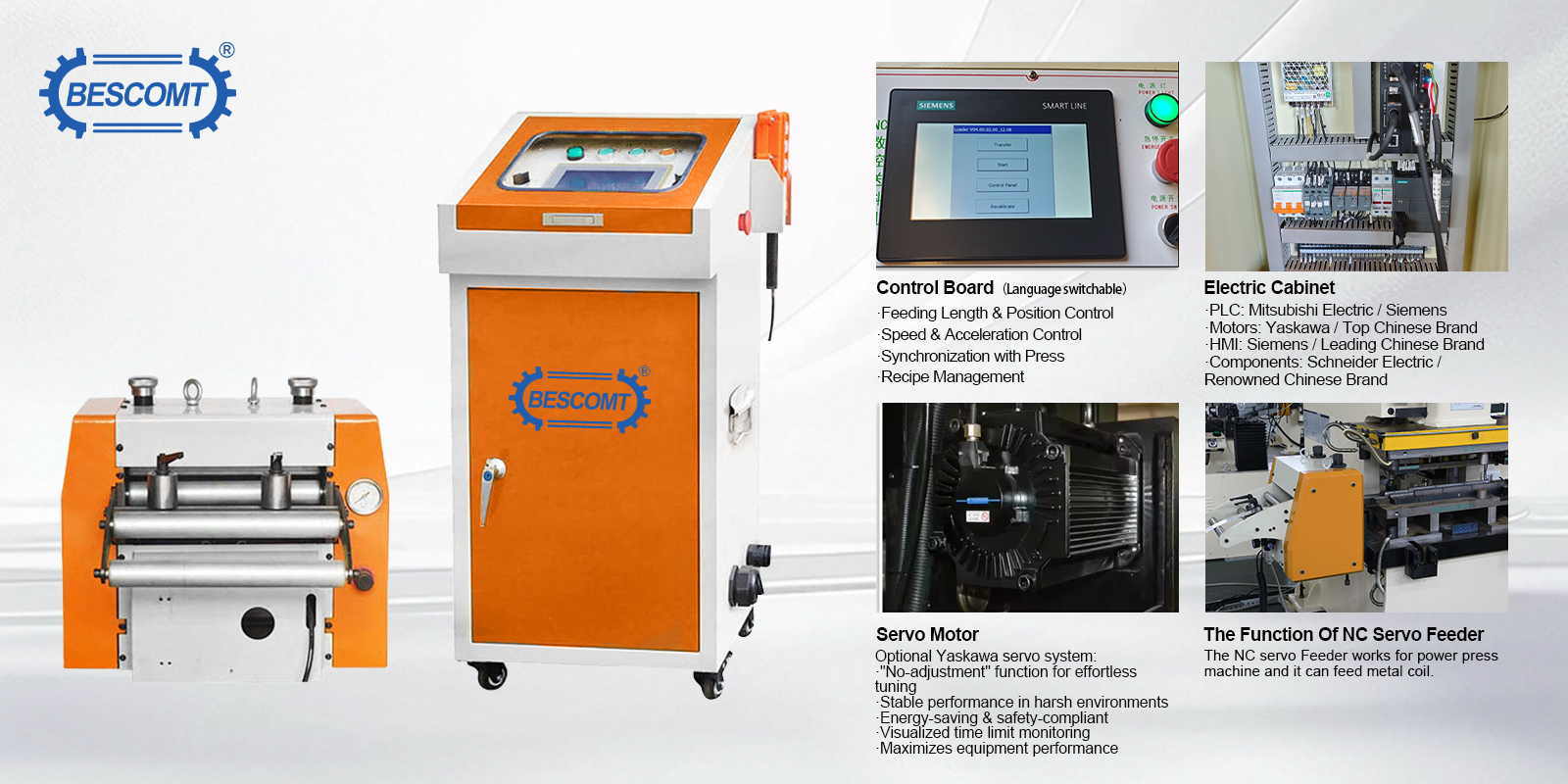
Scenario 1: High-Precision Stamping Requirements
Applicable industries
Industry | Applications |
Automotive | Door hinges, brake pads, clutch plates |
Electronics | Phone cases, computer cases, heat sinks |
Hardware | Locks, hinges, fasteners |
Home Appliances | Refrigerator, AC, washing machine parts |
New Energy | Solar brackets, battery casings |
Scenario 2: High-Mix, Low-Volume Production
·PLC Control, stores multiple sets of feeding parameters
·One-click recipe recall, auto-adjusts during changeovers
·Designed for workshops with frequent changeovers
Scenario 3: Long-Distance or Multi-Step Feeding
·Air Feeder: Limited by cylinder stroke, ≤800mm, does not support multi-step feeding
·Servo Feeder: Max feeding length 9999.99mm, supports multi-step feeding programming
Scenario 4: Thick Plate or High-Strength Material Processing
·Air Feeder: Suitable for thin sheets ≤2mm; lacks sufficient thrust for thicker materials, O-rings prone to wear
·Servo Feeder: Applicable for 0.2-4.5mm+; servo motor provides stable feeding force
Air Feeder Application Scenarios
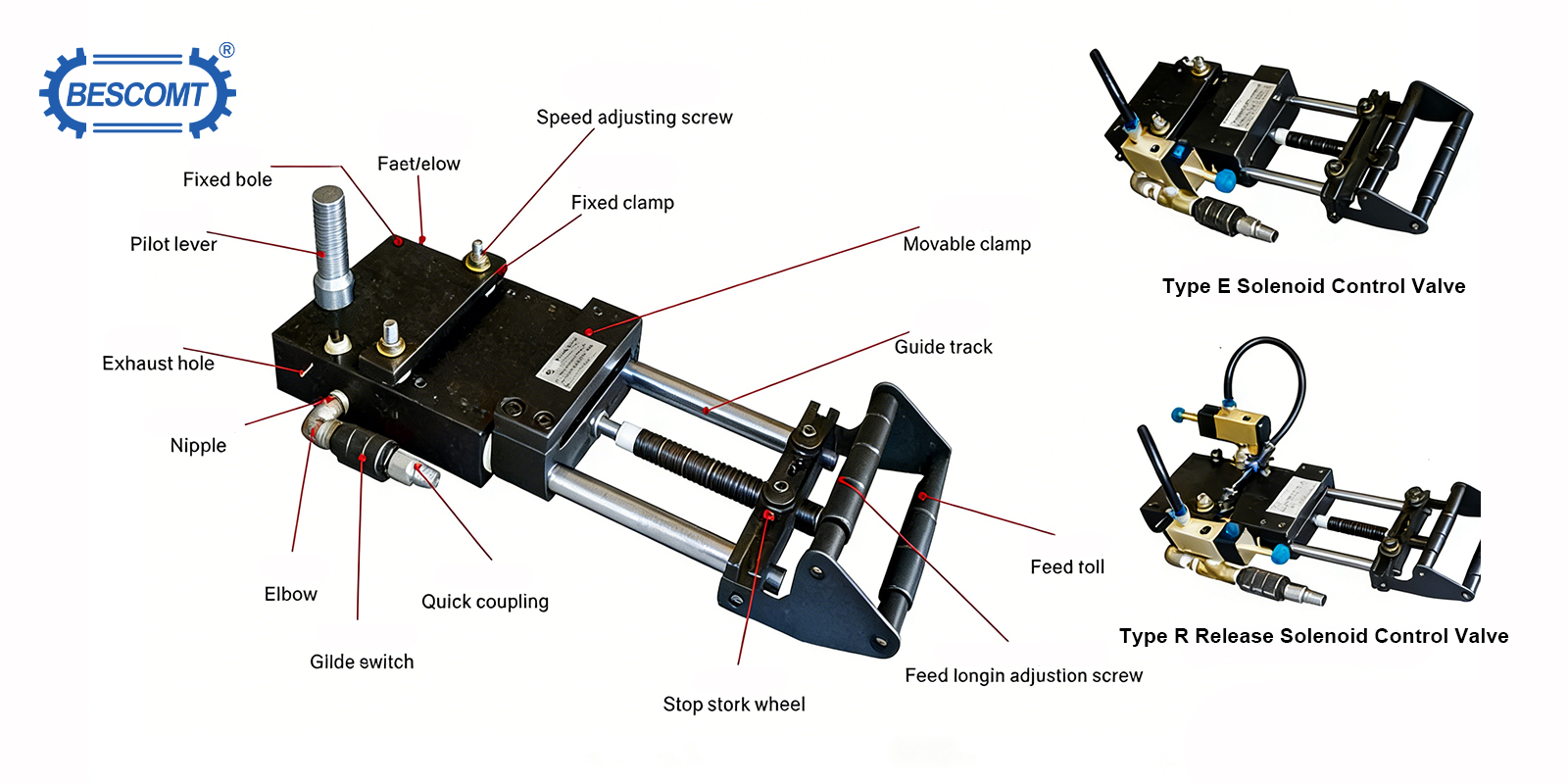
Scenario 1: Startup Workshops with Limited Budget
·Low-cost entry to automation
·Minimal investment, quick efficiency gains
·Ideal for budget-conscious startups
Scenario 2: Fixed-Specification Mass Production
·Best for: Single product, fixed feeding length, few changeovers
·Operation: Manual setup required, then runs stably
Scenario 3: Thin Sheet Light-Duty Stamping
·Perfect for thin, low-load stamping: air feeders offer reliable, cost-effective performance.
Scenario 4: Medium to Low-Speed Stamping Lines
·Speed: ≤200 spm
·Solution: Air feeders
·Benefits: Short payback, simple maintenance
Summary and Recommendations
Selection Direction | Applicable Scenarios |
Servo Feeder | Production lines requiring high precision, high-mix, long feeding length, thick materials, and high level of automation |
Air Feeder | Primary automation scenarios with limited budget, fixed products, thin materials, and medium-low speed stamping |


