


Views: 0 Author: Site Editor Publish Time: 2026-10-23 Origin: Site


Scaling metal component production requires matching equipment capabilities to specific alloy behaviors and part geometries. Plant managers face a direct engineering challenge: selecting press tonnage, stroke dynamics, and thermal limits that handle diverse portfolios without overcapitalizing on machinery. You need equipment that maintains metallurgical integrity across tough metals while hitting production quotas. Understanding the mechanical and thermal interactions of a modern hot forging press solves this problem. These machines use controlled mechanical force rather than traditional uncontrolled impacts. Evaluating this controlled squeeze helps you minimize die wear, ensure consistent part quality, and maximize equipment returns. We will break down how different metals react under pressure, how to configure stroke rates for specific parts, and the exact metrics you need to evaluate before upgrading your forging line.
Material-Specific Deformation: Hot forging relies on heating metals above their recrystallization temperature, drastically reducing the yield strength required to shape tough alloys and achieving the best material deformation compared to cold forging.
Press vs. Hammer Dynamics: Unlike traditional drop hammers that rely on repeated kinetic impacts, modern forging presses apply controlled, sustained squeezing force, which is essential for uniform internal grain structures in engineered parts.
Application-Driven Configurations: Press selection must align with part geometry—ranging from high-speed continuous strokes for fasteners to sustained, high-tonnage pressure for heavy automotive components.
Tooling and Thermal Management: The primary operational cost and implementation risk lies in managing die life, thermal fatigue, and surface oxidation (scale loss).
Evaluation Framework: Procurement decisions should be based on a matrix of required tonnage, dimensional tolerance limits, automation compatibility, and energy consumption profiles.
Success in hot forging depends on achieving optimal plastic deformation while preserving the internal grain structure of the metal. When you heat carbon steel to temperatures between 1100°C and 1250°C, it enters the austenitic phase. The molecular structure becomes highly ductile. This thermal state eliminates strain hardening, dropping the material's yield strength by up to 70%. You can now shape difficult materials like high-carbon steel, alloy steel, or titanium alloys that would shatter or crack under cold processing conditions. The resulting forged part exhibits superior structural integrity, as the grain flow aligns with the contours of the final geometry.
The distinction between press forging and traditional hammer forging dictates the internal quality of the component. Drop hammers rely on repeated, high-velocity kinetic impacts. These rapid blows often cause surface-level deformation, leaving the core of the billet less worked. A press delivers a sustained, controlled squeeze. This continuous force application ensures deep, uniform metal flow throughout the entire die cavity. The metal fills complex recesses without leaving internal voids or shear bands.
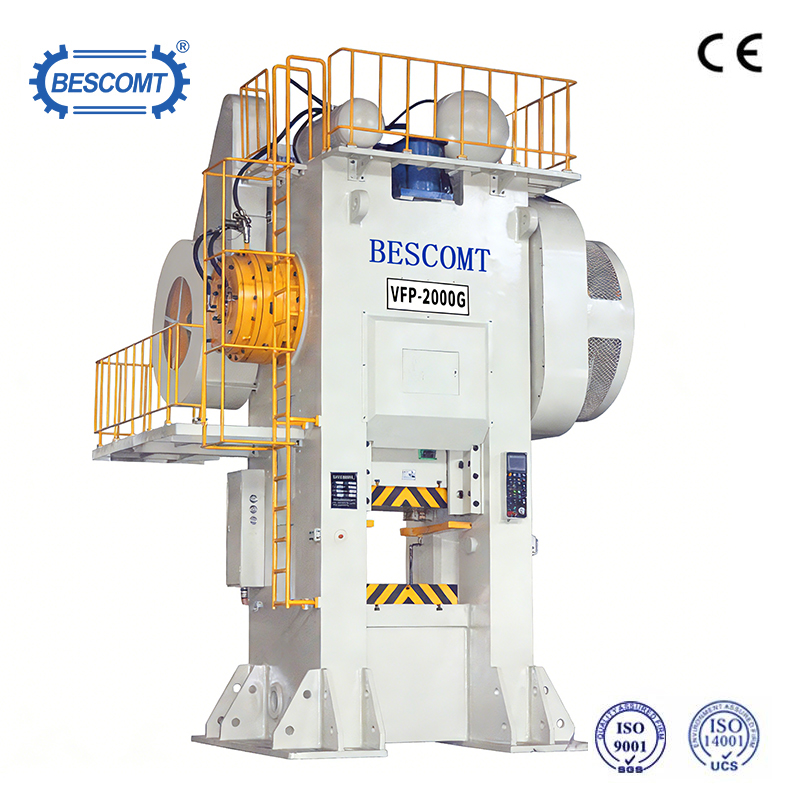
Actuation methods further define the press's capability. Mechanical presses use eccentric shafts or crank mechanisms to drive the ram. They deliver maximum force near bottom dead center (BDC) and operate at high cycle rates, making them ideal for automated, high-volume production. Hydraulic presses use fluid pressure to drive cylinders, delivering full tonnage throughout the entire stroke. You use hydraulic systems when forging deep cavities or when the material requires a slower deformation rate to prevent tearing.
Selecting the right equipment requires analyzing the specific part you intend to produce. High-volume fasteners demand specialized kinematics to maintain profitability. A dedicated bolt and nut making machine utilizes multi-station progressive forging. Wire stock feeds directly into the machine, gets sheared to length, and transfers across three to six die stations in a single continuous cycle. These systems run at rapid stroke rates—often exceeding 150 parts per minute. You need sophisticated mechanical transfer fingers and precise timing cams to move the blanks between stations without dropping them.
Larger, symmetrical components shift the equipment focus toward structural stability and bed size. When producing circular parts, a specialized flange disc hot forging press must provide enough platen surface to handle severe radial material displacement. As the ram descends, the metal flows outward from the center. The press frame must resist the massive off-center loads generated if the billet sits slightly off-axis. Proper draft angles and controlled ram speeds prevent edge cracking during this radial expansion.
Heavy-duty structural components demand immense tonnage and absolute frame rigidity. An automotive parts forging press routinely handles crankshafts, control arms, and connecting rods. These parts require precise grain flow for fatigue strength. The press must feature a massive, pre-tensioned tie-rod frame to prevent deflection under loads exceeding 2500 tons. Repeatability at bottom dead center ensures every connecting rod meets the exact dimensional thickness required for the engine assembly, minimizing the flash thickness and reducing material waste.
Non-ferrous materials require an entirely different thermal and mechanical approach. A brass valve making machine handles softer metals with lower recrystallization temperatures, typically around 700°C to 800°C. Brass cools rapidly upon contact with the steel dies. The press must execute rapid cycle times to fill the die cavities before the material chills and hardens. You also need specialized graphite-water lubrication spray systems to prevent the brass from sticking to the tooling and to cool the dies between rapid strokes.
The choice between warm and hot forging dictates your dimensional tolerances, surface finish, and tooling costs. Traditional hot forging excels at reducing the tonnage required to shape massive parts. However, heating steel to 1200°C introduces thermal expansion. As the forged part cools to room temperature, it shrinks. This shrinkage makes it difficult to hold tight dimensional tolerances, usually requiring extensive secondary CNC machining to hit final specifications.
Warm forging occupies the thermal middle ground, typically operating between 600°C and 900°C for steel. This temperature sits below the full recrystallization point but well above room temperature. A heavy warm forging press significantly reduces scale formation compared to standard hot forging. You get better surface quality and tighter tolerances. Because the material retains more of its intrinsic yield strength at these lower temperatures, you need significantly higher press tonnage to achieve the same deformation.
The trade-off requires balancing machine investment against post-processing costs. Warm forging minimizes secondary machining and saves raw material, but it demands a more robust machine structure and premium die materials to withstand the extreme forming pressures.
Process Parameter |
Traditional Hot Forging |
Heavy Warm Forging |
|---|---|---|
Operating Temperature (Steel) |
1100°C - 1250°C |
600°C - 900°C |
Surface Oxidation (Scale) |
Heavy (1-2% material loss) |
Minimal |
Dimensional Tolerance |
Moderate (Requires machining) |
High (Near net shape) |
Required Press Tonnage |
Lower |
Significantly Higher |
Die Wear Mechanism |
Thermal fatigue, abrasion |
High mechanical stress, plastic deformation |
Procurement teams must evaluate equipment based on hard engineering data rather than generic specifications. Tonnage calculation forms the foundation of any press acquisition. Overestimating tonnage wastes capital and floor space. Underestimating tonnage leads to incomplete die fill, stalled rams, and broken press frames.
Calculate Projected Area: Measure the maximum cross-sectional area of the part perpendicular to the stroke direction, including the flash gutter.
Determine Flow Stress: Identify the specific flow stress of the alloy at your target forging temperature.
Apply Complexity Factor: Multiply the base calculation by a factor ranging from 3 to 8, depending on the intricacy of the ribs, webs, and draft angles.
Die life and thermal fatigue represent your highest ongoing operational costs. Extreme heat transfers from the billet into the tooling during every stroke. This thermal cycling causes heat checking—a network of fine cracks on the die surface. Abrasive scale further degrades the cavity. You mitigate this by specifying H13 tool steel, applying advanced ceramic or nitride coatings, and integrating automated spray systems that deliver precise volumes of lubricant and cooling water between strokes.
Automation compatibility dictates your actual production throughput. Manual billet loading introduces inconsistent cycle times, which wreaks havoc on thermal management. If a billet sits in the die for an extra two seconds, it cools down, requires more tonnage to forge, and transfers excessive heat to the tooling. Modern lines integrate robotic arms or walking beam transfer systems. You synchronize these mechanisms with induction heaters and optical pyrometers to ensure every billet enters the press at the exact required temperature and rhythm.
Scale formation remains an unavoidable reality in traditional hot forging. As the heated metal reacts with oxygen in the atmosphere, a brittle iron oxide layer forms on the surface. This scale consumes raw material and acts as a severe abrasive. If scale flakes off and remains in the die cavity, the next stroke presses it into the surface of the new part, causing deep pitting defects. Facilities manage this by installing high-pressure water descaling units. These systems blast the billet with water at 150 to 200 bar immediately before it enters the press, shattering and washing away the scale.
Energy consumption heavily impacts your operational budget. The press itself consumes power, but the heating equipment draws massive electrical loads. Induction heaters require megawatts of power to continuously heat steel billets to 1200°C. You must audit your facility's power grid capacity before installation. Gas furnaces offer an alternative, but they increase the thermal footprint of the plant and require extensive exhaust and ventilation infrastructure. Consistent, high-efficiency heating stabilizes the entire forging process. Temperature fluctuations directly cause inconsistencies in material flow, final dimensions, and mechanical properties.
The success of a forging operation relies on aligning press tonnage, stroke kinematics, and thermal control with your specific material and part geometry. Operators must categorize their production needs accurately. High-speed fastener production requires rapid multi-station kinematics, while heavy automotive components demand massive tonnage and rigid frames to ensure precise grain flow and structural integrity.
Take the following steps before requesting vendor quotes:
Run finite element analysis (FEA) software to simulate material flow and identify potential die wear points for complex geometries.
Calculate exact tonnage requirements based on your specific alloy's flow stress and the part's projected footprint, including flash allowances.
Audit your facility's electrical grid to ensure it can support the megawatt draw of synchronized induction heating systems.
Consult with tooling engineers to determine if the tighter tolerances of warm forging justify the higher press tonnage and premium die materials required.
A: The difference lies in the material temperature. Hot forging heats metal above its recrystallization point, increasing malleability and lowering the required tonnage to shape tough alloys. Cold forging operates at room temperature. It requires significantly higher press tonnage and highly ductile raw materials, but it delivers superior dimensional accuracy and surface finish without scale formation.
A: A press applies a slow, continuous, and controlled squeezing force. This sustained pressure promotes deep, uniform internal grain flow throughout the part. A hammer uses repeated, high-velocity kinetic impacts. Hammers force metal into the die rapidly but often cause more surface-level deformation rather than consistent internal material flow.
A: You calculate tonnage by multiplying the projected surface area of the part (including the flash) by the material's flow stress at the specific forging temperature. You then multiply that baseline figure by a complexity factor—usually between 3 and 8—to account for die friction, intricate ribs, and draft angles.
A: While mechanically possible, it is highly inefficient. Steel and brass possess vastly different thermal properties, flow characteristics, and recrystallization temperatures. Switching materials requires completely changing the heating equipment, die materials, lubrication systems, and press cycle speeds. This causes excessive downtime and frequent quality control failures.
A: Die life ranges from 5,000 to 15,000 strokes depending on the material hardness, scale formation, and thermal cycling. Hot forging dies degrade rapidly due to thermal fatigue and abrasive wear. You extend die life by using premium H13 steel, applying nitride coatings, and maintaining strict automated lubrication and cooling cycles.
A: You choose warm forging to achieve tighter dimensional tolerances and better surface finishes. Operating below the recrystallization temperature drastically reduces scale formation. While warm forging requires higher press tonnage and stronger dies, it eliminates or significantly reduces the need for expensive secondary CNC machining operations.
A: Scale is a hard iron oxide layer that forms when hot metal reacts with oxygen. It acts as a severe abrasive, rapidly accelerating die wear. If scale gets trapped in the die cavity, the press forces it into the part, causing surface pitting and structural defects. You must use high-pressure descaling systems to remove it.


