Views: 0 Author: Site Editor Publish Time: 2026-06-10 Origin: Site
Choosing the right equipment for sheet metal processing stands as a critical capital decision for any facility. This choice dictates your daily production throughput. It also controls routine maintenance overhead and shop floor safety compliance. Evaluating the mechanical punching machine vs pneumatic power press requires looking far beyond basic tonnage capabilities. The core difference centers directly on their distinct power transmission methods. Flywheel inertia powers one system. Compressed air drives the other. These fundamentally different mechanisms yield entirely different application profiles and facility infrastructure requirements. This guide strips away common marketing fluff to reveal the true operational realities behind each technology. We will explore the lifecycle performance, routine maintenance needs, and strict OSHA compliance requirements of both systems. You will learn exactly how to match the right machine to your specific sheet metal applications. Production engineers and plant managers can use these practical insights to make an evidence-based equipment decision.
The fundamental difference lies in force generation: the mechanical punching machine relies on a motor-driven flywheel for high-speed, continuous impact, whereas a pneumatic power press uses compressed air cylinders for adjustable, controlled force.
Mechanical presses dominate in continuous, high-volume blanking and piercing where cycle speed is the primary success metric.
Pneumatic presses excel in operational safety, variable stroke requirements, and reduced structural vibration, though they carry hidden costs in compressed air generation.
Selecting a reputable metal stamping machine supplier requires evaluating their post-sale support, parts availability, and adherence to regional safety standards (e.g., OSHA compliance).
Understanding the physics behind these machines prevents costly procurement mistakes. We must examine how each system generates and transfers force.
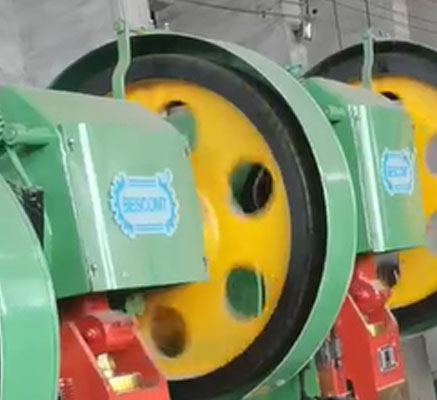
The mechanical system relies entirely on stored kinetic energy. An industrial electric motor drives a massive rotating flywheel. This flywheel continuously spins during operation. It stores immense rotational energy. A heavy-duty clutch mechanism transfers this stored energy directly to the crankshaft. The crankshaft then drives the pitman arm and ram downward.
This design creates a rigid, unalterable stroke length. The operational reality remains very clear. You get rapid, repetitive, high-tonnage impacts. We see this system thrive in high-speed manufacturing environments. The peak physical force occurs exactly at bottom-dead-center. You cannot easily adjust the stroke parameters once technicians set them. The machine commits fully to every single punch.
Common Mistake: Operators often underestimate the extreme kinetic energy involved. Applying a mechanical press to jobs requiring variable thickness can shatter expensive dies.
The pneumatic approach utilizes fluid power principles instead of rotational mass. It connects directly to your facility's shop air compressors. High-pressure compressed air fills heavy-duty internal cylinders. This sudden air pressure forces the ram downward to punch the material. The physics differ drastically from flywheel systems.
You can easily adjust the stroke length on these machines. Operators also maintain precise pressure control throughout the cycle. The pressing force remains consistent from top to bottom. A pneumatic power press never relies on bottom-dead-center physics. It provides consistent pressure exactly where you need it.
Best Practice: Always install dedicated air dryers near your pneumatic equipment. Moisture inside the cylinders will cause rapid seal degradation.
We should briefly consider hydraulic presses for comprehensive context. Hydraulic systems offer superior deep-drawing capabilities for complex shapes. They use pressurized oil rather than compressed air. However, they operate at significantly slower speeds. Both mechanical and pneumatic systems easily outperform them in raw cycle times. You should reserve hydraulic systems for deep forming, not rapid blanking.
You must evaluate equipment based on strict production metrics. We will examine three critical operational categories to guide your decision.
Mechanical systems deliver superior Strokes Per Minute (SPM). The continuous rotational energy allows incredibly rapid cycling. They excel in high-speed progressive die stamping applications. A mechanical punching machine maintains relentless production rhythms. You can easily process thousands of simple parts hourly. Some high-speed models exceed 800 SPM.
Pneumatic systems inherently run at slower cycle times. Fluid physics dictates this hard limitation. The cylinders require time for air exhaust and refill cycles. Compressors must recharge the line pressure between every stroke. Most models max out around 100 SPM. However, pneumatic systems offer rapid engagement for single-cycle operations. They actuate almost instantly when an operator triggers the pedal.
High-impact shock characterizes mechanical pressing operations. The rigid kinetic impact generates substantial structural vibration. This sudden shock wave transfers directly through the tooling. It can accelerate die wear significantly over long production runs. Facilities often require heavy-duty, vibration-damping concrete foundations. You must isolate these massive machines from sensitive surrounding equipment.
Pneumatic systems apply force much more smoothly. The compressible nature of shop air cushions the impact slightly. This smoother force application reduces premature die wear. It transmits significantly less shock into your facility floor. You can potentially extend your tooling life by thousands of cycles. This benefit directly impacts long-term operational efficiency.
Performance Metric | Mechanical Flywheel System | Pneumatic Air System |
|---|---|---|
Maximum Speed (SPM) | Exceptionally High (Up to 800+ SPM) | Moderate (Typically under 100 SPM) |
Force Profile | Peaks sharply at bottom-dead-center | Consistent throughout the entire stroke |
Floor Vibration | Severe; requires specialized foundations | Minimal; easily managed with standard pads |
Stroke Adjustability | Rigid; fixed by crankshaft geometry | Highly flexible; easily adjusted on demand |
Tooling Shock | High impact; accelerates micro-cracking | Cushioned impact; extends tooling lifespan |
Initial facility infrastructure requirements vary widely between these technologies. Mechanical base models typically operate independently. They function as standalone structural units. You just need proper electrical drops and heavy foundations. Pneumatic systems demand existing high-capacity air infrastructure. You must have adequate shop air compressors already installed and running.
Maintenance routines differ fundamentally on the shop floor. Mechanical presses rely on heavy lubrication management. Technicians must regularly inspect and replace worn clutch pads. Brake linings require continuous adjustment. The rotating mass requires precise bearing maintenance to prevent catastrophic failure.
Pneumatic systems eliminate complex mechanical clutches entirely. This simplifies the central drivetrain significantly. However, they introduce entirely different mechanical risks. You must monitor for insidious air leaks constantly. Cylinder seal wear requires regular diagnostic checks. We recommend implementing routine ultrasonic leak detection protocols. A small air leak silently drains overall facility efficiency.
Regulatory context strictly governs metal stamping operations. Safety evaluation is absolutely not optional. OSHA standard 1910.217 dictates specific guarding requirements for power presses. Strict compliance protects your operators from catastrophic crush injuries. You must understand how these machines handle emergency stops.
We must deeply examine how these machines stop. Traditional mechanical presses often feature full-revolution clutches. These older systems cannot stop mid-stroke. Once an operator triggers the pedal, the ram completes a full downward cycle. This poses severe safety risks for anyone nearby. Full-revolution machines require complex physical barrier guarding. You cannot legally rely on electronic sensors alone.
Modern pneumatic presses inherently feature part-revolution capabilities. Many newer mechanical presses also utilize advanced pneumatic clutches. Part-revolution means you can halt the ram instantly. The machine can abort the cycle at any point during descent. This fundamental capability transforms workplace safety protocols completely.
Pneumatic systems integrate natively with modern safety hardware. You can easily install electronic light curtains. Two-hand anti-tiedown controls wire directly into the main circuitry. Emergency stop buttons halt the ram immediately. You do not risk mechanical clutch failure during a panic stop. These integrations represent vital industry best practices. Never compromise on operator protection mechanisms.
Common Mistake: Wiring a light curtain directly into an old full-revolution mechanical press. The light curtain might trigger, but the physical flywheel cannot stop. This creates a false sense of operator security.
Selecting the right technology requires matching machine traits to your parts. Different products demand entirely different pressing physics. You must align your equipment with your exact production portfolio.
You should specify mechanical equipment for highly repetitive, fast-paced tasks. They dominate specific manufacturing sectors.
Continuous blanking and piercing: Making thousands of identical washers or brackets.
High-volume automotive parts: Pushing out structural components where speed dictates profitability.
Fast-moving consumer goods (FMCG): Stamping internal hardware for appliances or electronics.
Dedicated production lines: Facilities prioritizing absolute output volume over changeover flexibility.
These machines thrive when running identical parts for days. The continuous SPM maximizes your daily material yield. Do not use them for short-run prototyping.
You should deploy pneumatic equipment for varied operational demands. They handle high-mix production beautifully.
Variable thickness operations: Jobs requiring frequent adjustments to handle different metal gauges.
Adjustable stroke requirements: Tasks needing varying clearance for part removal.
Assembly and riveting: Precision sheet metal work requiring controlled pressing force.
Vibration-sensitive zones: Facilities located near delicate CNC machining centers or metrology labs.
Manual loading: Applications requiring rapid, safe manual part insertion by human operators.
Pneumatic systems shine in lower-volume, customized environments. They adapt quickly to changing daily production schedules. You gain immense flexibility on the shop floor.
Your equipment vendor heavily influences your ultimate manufacturing success. You must look far beyond simple catalog specifications. A rigorous vetting process prevents severe integration headaches later.
A reputable metal stamping machine supplier acts as an engineering consultant. Do they calculate specific tonnage requirements for your application? Do they analyze your existing die compatibility thoroughly? Avoid vendors who merely sell machines from a glossy brochure. Seek technical partners who understand metal deformation physics deeply. They should review your part drawings before recommending equipment.
Equipment installation requires meticulous facility planning and validation. Look for suppliers offering verified installation validation services. They should provide clear, engineer-stamped foundation requirements. They must outline realistic baseline operational evaluations. Proper foundation engineering prevents catastrophic machine shifting over time. It also mitigates dangerous floor vibrations reaching other departments.
Prolonged equipment downtime cripples tight production schedules. Assess the supplier's domestic inventory carefully. They must stock critical wearable parts locally. Ask them directly about clutch pads, pneumatic seals, and control solenoids. Review their field-service Service Level Agreements (SLAs). Fast technician response times prevent minor mechanical faults from becoming major delivery delays.
Best Practice: Always request a spare parts availability list during the procurement phase. A cheap machine becomes useless if you wait months for a proprietary replacement seal.
The engineering debate between these pressing technologies ultimately comes down to speed versus control. Your operational priorities strictly dictate the correct choice. You must assess your daily production mix honestly.
Default to mechanical systems for uninterrupted, high-speed progressive die runs.
Opt for pneumatic systems when operator safety and stroke flexibility outweigh raw cycle speed.
Protect your expensive tooling investments by matching machine vibration profiles to your specific dies.
Prioritize OSHA compliance by selecting machines with certified part-revolution stopping capabilities.
Next Action: Audit your facility's current compressed air capacity today. Calculate the exact tonnage requirement of your heaviest stamping die. Complete these critical engineering steps before engaging external equipment vendors.
A: Indirectly, yes. While the press itself uses little electricity, the shop air compressor running to supply it is highly energy-intensive. You must factor this heavy compressor usage into your facility's daily operating overhead. Compressed air remains one of the most expensive industrial utilities.
A: Yes, older mechanical presses can undergo extensive retrofitting. Engineers can install modern pneumatic clutches and advanced control packages. This achieves part-revolution stopping capabilities and ensures light-curtain compliance. However, this process requires significant capital investment and prolonged machine downtime.
A: Mechanical presses require traditional millwrights intimately familiar with heavy mechanical wear. They handle gears, heavy clutches, and complex lubrication systems. Pneumatic presses require technicians highly skilled in fluid power systems. They must understand seal diagnostics, pneumatic logic valves, and overall air system efficiency.