


Views: 0 Author: Site Editor Publish Time: 2026-10-13 Origin: Site


High-volume beverage, spirits, and pharmaceutical packaging operations rely on precise, defect-free aluminum closures. These caps ensure product safety, brand integrity, and shelf life. Transitioning from outsourced closures to in-house manufacturing requires selecting the exact right machinery. Choosing incorrect equipment leads to high scrap rates, tooling bottlenecks, and compliance failures in strict regulatory environments.
Buyers frequently confuse cap manufacturing equipment with cap sealing equipment. This guide focuses strictly on the industrial machinery required to fabricate the caps from raw aluminum coils. We do not focus on the capping machines used to apply them to glass or plastic bottles.
Building a reliable production workflow requires understanding the exact sequence of equipment needed. You must move efficiently from raw aluminum coils to finished closures. This guide breaks down the technical specifications, evaluation criteria, and implementation realities of selecting an aluminum bottle cap making machine and its supporting infrastructure.
A complete production line requires a synchronized sequence of uncoilers, stamping presses, threading/knurling machines, and wadding systems, rather than a single standalone unit.
The quality of the aluminum cap stamping die dictates the baseline yield rate; sub-standard tooling results in dimensional deviations, material tearing, and frequent jams.
Evaluating a metal stamping machine manufacturer requires auditing their equipment’s compatibility with specific aluminum alloy grades, elongation limits, and tooling changeover speeds.
Manufacturing aluminum closures requires a highly synchronized workflow. Raw material enters the facility as heavy aluminum coils or pre-coated sheets. The equipment transforms this flat metal into a three-dimensional, functional closure. A complete aluminum cap production line links multiple specialized machines together.
The process follows a strict sequence:
Coil Feeding: An automated uncoiler unwinds the aluminum strip. A straightener flattens the material to remove coil set and ensure smooth feeding.
Blanking and Drawing: A high-speed stamping press punches out a circular blank. It simultaneously draws the metal into a cup shape.
Edge Folding: The unthreaded shell travels via air conveyors. A folding machine rolls the bottom edge to eliminate sharp burrs.
Forming: Specialized stations handle knurling, threading, or slitting based on the specific cap design.
Lining: Wadding equipment inserts a sealing liner to guarantee a leak-proof fit.
Inspection: Automated optical systems scan every cap. They eject units with dimensional flaws or missing liners.
Integration between these standalone machines prevents bottlenecks. You must install buffer zones, automated sorting bowls, and variable-speed conveyors. If the lining machine pauses for a material roll change, the buffer zone absorbs the output from the stamping press. This keeps the front end of the line running smoothly without catastrophic jams. We often see poorly integrated lines suffer from micro-stops. These brief pauses accumulate, destroying daily yield targets. Proper buffer management solves this.
Scrap management is another critical integration point. As the press punches blanks, it leaves behind an aluminum skeleton. Automated choppers cut this skeleton into small, manageable pieces. Conveyors then transport the scrap to recycling bins, keeping the primary workspace clear and safe.
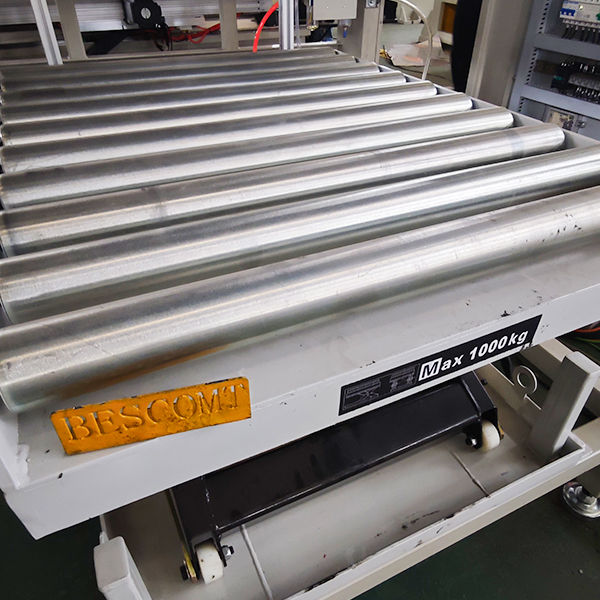
The foundation of the entire operation is the metal stamping press. This machine takes the raw aluminum coil and forms the initial shell. An automated servo-feeder pulls the metal strip into the press with extreme precision. The press then uses immense mechanical force to punch and draw the metal.
Technical specifications dictate your production ceiling. You must evaluate tonnage requirements based on your cap diameter and material thickness. A standard line often utilizes a 45-ton to 60-ton press. Stroke speeds determine your maximum output. High-performance presses can exceed 400 strokes per minute. Precision servo-feeding mechanisms ensure the metal advances the exact required distance. This minimizes aluminum skeleton waste.
Lubrication systems are equally vital. The press must apply a micro-layer of forming oil to the aluminum strip before it enters the die. This prevents tearing and reduces friction. However, excessive oil contaminates the downstream lining process. Precision spray nozzles ensure the exact required coating weight.
Choosing the right equipment requires vetting the vendor carefully. When evaluating a metal stamping machine manufacturer, look at the frame rigidity. Cast iron frames dampen vibration better than welded steel. Less vibration extends tooling life and maintains part tolerance. You also need to verify the integration between the press, the automated feeders, and the safety interlocks.
The press provides the force, but the tooling provides the shape. The die is a custom-machined mold. It dictates the exact dimensions, skirt length, and structural integrity of the cap shell. A high-quality aluminum cap stamping die is the most critical component for maintaining yield rates.
You must evaluate dies based on material hardness and cavity configuration. Premium dies utilize tungsten carbide inserts for the cutting edges. Carbide outlasts standard tool steel significantly. This reduces maintenance downtime for sharpening. High-volume operations use multi-cavity dies. A four-cavity die produces four caps per single press stroke. This quadruples output without increasing press speed.
Poor die design introduces severe implementation risks. Sub-standard tooling causes aluminum galling. Metal flakes stick to the die surface. This leads to deep scratches on the finished caps. It also causes uneven wall thickness and frequent production halts. Investing in premium tooling upfront prevents endless troubleshooting on the factory floor.
Many beverage and spirits brands use Roll-On Pilfer-Proof (ROPP) closures. The stamping press creates a smooth, unthreaded shell. A dedicated ROPP cap making machine processes this blank shell into a functional tamper-evident closure.
The mechanism involves several precise steps. First, the machine knurls the top edge of the cap. This provides a textured grip for the consumer. Next, rotary slitting knives cut the tamper-evident band at the bottom of the skirt. The machine leaves tiny bridges of aluminum intact.
The outcome focus here is bridge strength. This requires extreme precision. If the bridges are too weak, they break prematurely during transport or hopper feeding. If the bridges are too strong, the consumer cannot break the seal to open the bottle. The slitting machine must offer micro-adjustments. Technicians need to dial in the exact bridge tension based on the specific aluminum temper.
Certain industries require pre-threaded caps. Cosmetics, pharmaceuticals, and specific beverage formats often use these. Unlike ROPP caps, which are threaded onto the bottle during the sealing process, these caps feature threads formed at the factory.
An aluminum screw cap making machine utilizes a thread rolling mechanism. The unthreaded shell slides over a rotating mandrel. An outer tooling wheel presses against the aluminum. It forces the metal into the grooves of the mandrel. This forms the permanent thread.
Tooling flexibility is a major evaluation point. You need a machine that handles different thread pitches and diameters. Assess how long it takes a technician to swap the mandrels and outer wheels. Minimal changeover time keeps your production schedule agile. It allows you to respond quickly to changing client demands.
An aluminum cap cannot seal a bottle on its own. It requires a compressible liner. Wadding and lining equipment inserts this seal into the cap. This ensures a hermetic, leak-proof barrier against oxygen and moisture.
Manufacturers use two primary approaches:
Pre-cut Disc Insertion: The machine punches discs from a roll of liner material, like EPE foam or Saranex. It then presses the disc into the cap.
Flowed-in Lining: The machine injects a liquid plastisol compound into the cap. The cap then passes through an oven. The heat cures the compound into a solid gasket.
Quality control at this stage is non-negotiable. You must integrate vision systems immediately after the lining station. High-speed cameras detect missing, folded, or off-center liners. The system automatically blasts defective caps off the line with a jet of compressed air. This happens before they reach the packaging bin.
Premium spirits and wines require distinct branding. You can integrate branding equipment directly into the production line or run it offline. Machines perform top-embossing to raise logos on the cap surface. Side-lithography prints complex designs on the skirt. Hot foil stamping adds metallic accents.
Automated Optical Inspection (AOI) systems serve as the final gatekeeper. These high-speed camera systems inspect every cap from multiple angles. They look for visual defects, scratched paint, and dimensional inaccuracies. They also verify that the tamper-evident bridges are fully intact. Modern AOI systems utilize multi-spectrum lighting. This allows the cameras to detect microscopic scratches on highly reflective aluminum surfaces. They also use ultraviolet sensors to verify the presence of clear plastisol liners, which are invisible under standard white light. AOI systems guarantee that you only ship perfect closures to your clients.
Machinery selection dictates your labor requirements. Manual or semi-automatic machines are suitable for low-volume operations. Boutique distilleries or pilot testing facilities often start here. These machines have a high labor cost per unit and offer lower consistency. Operators must manually load shells into the knurling or lining stations.
Fully automated lines are essential for continuous high-speed production. They require zero manual intervention during normal operation. However, they shift your labor needs. You no longer need manual operators. Instead, you need skilled technicians for maintenance, troubleshooting, and PLC programming.
You measure machine output in Caps Per Minute (CPM). Success requires matching your CPM to the downstream bottling line capacity or your wholesale demand. Entry-level lines might produce 200 CPM. High-performance lines can exceed 1,200 CPM.
You must understand the speed versus quality trade-off. Pushing machinery beyond its rated speeds increases scrap rates drastically. It causes dimensional deviations as the metal fails to form properly. Excessive speed also accelerates wear and tear on the stamping die. This leads to premature tooling failure and unexpected downtime.
Aluminum is not a universal material. Equipment must be calibrated for specific aluminum grades, such as 8011 or 3105. It must also account for the specific temper, or hardness, of the metal.
Highly automated machinery is sensitive to variations in sheet thickness. The metal's elongation limits dictate how deep you can draw the cap without tearing. If the raw aluminum coil has minor dimensional deviations, it can cause catastrophic jams in high-speed lines. Your machinery must have tight tolerances, but your raw material sourcing must be equally strict.
Different end products demand different machinery configurations. You cannot use a generic setup for every industry.
Carbonated Water and Soda: Requires caps capable of holding high internal pressure. The lining machine must insert specialized pressure-resistant wads.
Premium Spirits: Demands flawless aesthetics. The line needs advanced handling conveyors to prevent caps from scratching each other. It also requires embossing and foil stamping modules.
Pharmaceuticals: Requires strict hygiene standards. The machinery must feature stainless steel contact parts, enclosed HEPA-filtered environments, and precise tamper-evident slitting.
Closure Type | Primary Application | Key Machinery Required | Critical Quality Metric |
|---|---|---|---|
Standard ROPP | Wine, Spirits, Syrups | Stamping Press, Rotary Slitter, Knurler | Bridge breaking tension |
Pre-Threaded Screw Cap | Cosmetics, Pharma | Stamping Press, Thread Roller | Thread pitch accuracy |
Deep-Drawn Cap | Premium Liquor | Multi-stage Draw Press, Shaving Machine | Wall thickness uniformity |
Carbonated Beverage Cap | Sparkling Water, Soda | Stamping Press, Flowed-in Lining Machine | Pressure seal integrity |
Smart facility planning involves future-proofing. You should structure a custom aluminum cap production line that allows for modular upgrades. Start with a press that has excess tonnage capacity. As demand grows, you can swap a two-cavity die for a four-cavity die. You can also add faster downstream knurling and lining machines without replacing the entire front end of the line.
Optimizing the factory floor layout is vital. You must plan for linear material flow. Raw coils enter one end, and boxed caps exit the other. Design wide aisles for forklifts to remove scrap aluminum skeletons safely. Ensure operators have clear line-of-sight to the control panels and buffer zones.
High-speed manufacturing requires robust infrastructure. You cannot simply plug these machines into standard outlets. Factoring in heavy-duty power supplies is your first step. Stamping presses draw massive electrical currents during startup and operation.
You also need industrial compressed air systems. Air ejectors, pneumatic cylinders, and sorting bowls rely on constant, dry, oil-free air. Furthermore, the facility needs reinforced concrete flooring. High-tonnage stamping presses generate severe vibrations and carry immense static weight. Weak floors will crack, throwing the machinery out of alignment.
Raw material handling requires dedicated space. Aluminum coils weigh several tons. You need overhead bridge cranes or heavy-duty forklifts to move them safely. You also need heavy-duty uncoiler stations to hold and feed the metal into the press.
Temperature control within the facility also impacts production. Aluminum expands and contracts with temperature fluctuations. If the factory floor experiences extreme heat, the metal's elongation properties change. This can lead to unexpected tearing in the stamping press. Climate-controlled environments maintain material consistency and ensure the optical inspection cameras do not suffer from lens fogging.
Operational agility depends on changeover speed. You must evaluate how long it takes to switch the line from producing a standard 28mm cap to a 31.5mm cap. Lengthy changeovers destroy daily production quotas.
Standardization is the key to efficiency. Implement quick-change tooling systems, often referred to as Single-Minute Exchange of Die (SMED). These systems use hydraulic clamps and pre-aligned base plates. They allow technicians to swap massive stamping dies in minutes rather than hours. This reduces costly machine downtime and keeps your operation running.
Purchasing unsupported overseas machinery without a domestic service presence is a massive risk. If a proprietary servo motor fails, and the vendor has no local parts depot, your entire line shuts down for weeks. You lose contracts and damage client relationships.
You must verify the vendor's support infrastructure. Demand guaranteed OEM spare parts availability. Ensure they have local service technicians who can deploy rapidly. Furthermore, comprehensive operator training programs are mandatory. Your staff must know how to clear jams, lubricate the die, and adjust the slitting knives safely.
Regulatory adherence is critical, especially for food and pharmaceutical applications. Ensure the machinery utilizes food-grade lubricants in all areas where oil might contact the aluminum. The equipment must meet FDA guidelines and CE safety standards. This includes physical guarding, light curtains, and emergency stop circuits.
Traceability is another major requirement. Modern equipment integrates software for batch tracking and production data logging. The PLCs record the exact time, date, and machine settings for every batch. Automated reporting helps you isolate issues quickly if a client reports a defective closure.
Beyond basic safety, modern operations require advanced data integration. Supervisory Control and Data Acquisition (SCADA) systems connect the entire line to a central server. This allows plant managers to monitor CPM, scrap rates, and machine downtime in real-time. If a specific spindle on the knurling machine starts producing out-of-spec caps, the SCADA system flags the anomaly immediately. This prevents the line from producing thousands of defective units before a manual operator notices the issue.
An efficient aluminum cap manufacturing operation relies on a tightly integrated system of stamping, forming, and lining equipment. It is never just a single machine. The quality of your output depends heavily on die precision, material compatibility, and your facility's infrastructure. Rushing the procurement process leads to endless mechanical failures and wasted aluminum.
Begin your procurement by defining your exact requirements. Document your required CPM, cap dimensions, and specific closure type. Clarify whether you need ROPP or pre-threaded caps based on the end-use application. Use these hard metrics to filter out incapable vendors immediately.
Take the following steps to secure the right equipment:
Request detailed technical data sheets for the stamping press, die materials, and lining mechanisms.
Demand live demonstration runs at the vendor's facility using your specific aluminum alloy and temper.
Conduct a rigorous audit of the vendor’s post-sale support, focusing on spare parts inventory and technician availability.
Verify your facility's electrical, pneumatic, and flooring infrastructure before signing any purchase agreements.
A: A cap making machine manufactures the actual closure from raw aluminum coils. It stamps, forms, and lines the metal. A capping machine is used at the bottling plant to apply and seal that finished cap onto a filled glass or plastic bottle.
A: Production speeds vary widely based on automation and die cavities. Entry-level semi-automatic systems produce 100 to 200 caps per minute (CPM). Fully automated, multi-cavity industrial lines can comfortably produce 800 to 1,200 CPM.
A: Manufacturers typically use 8011 or 3105 aluminum alloys. The metal is usually supplied in an H14 or H16 temper. This specific hardness allows the metal to be deep-drawn without tearing while remaining strong enough to hold a seal.
A: Pre-threaded caps are manufactured with threads already rolled into the metal, often used for cosmetics or pharma. ROPP (Roll-On Pilfer-Proof) caps are manufactured as smooth shells. The threads are formed directly onto the glass bottle threads during the sealing process.
A: The wadding machine inserts a compressible liner inside the aluminum shell. Without this liner, metal-on-glass contact cannot create a hermetic seal. The liner prevents liquid leakage and protects the product from oxygen ingress.
A: Maintenance intervals depend on the die material. Standard tool steel dies may need sharpening every few million strokes. Premium dies with tungsten carbide inserts can run for tens of millions of strokes before requiring major maintenance or sharpening.


